

 Français
2026-07-07
Aerospace 3D printing: materials and applications
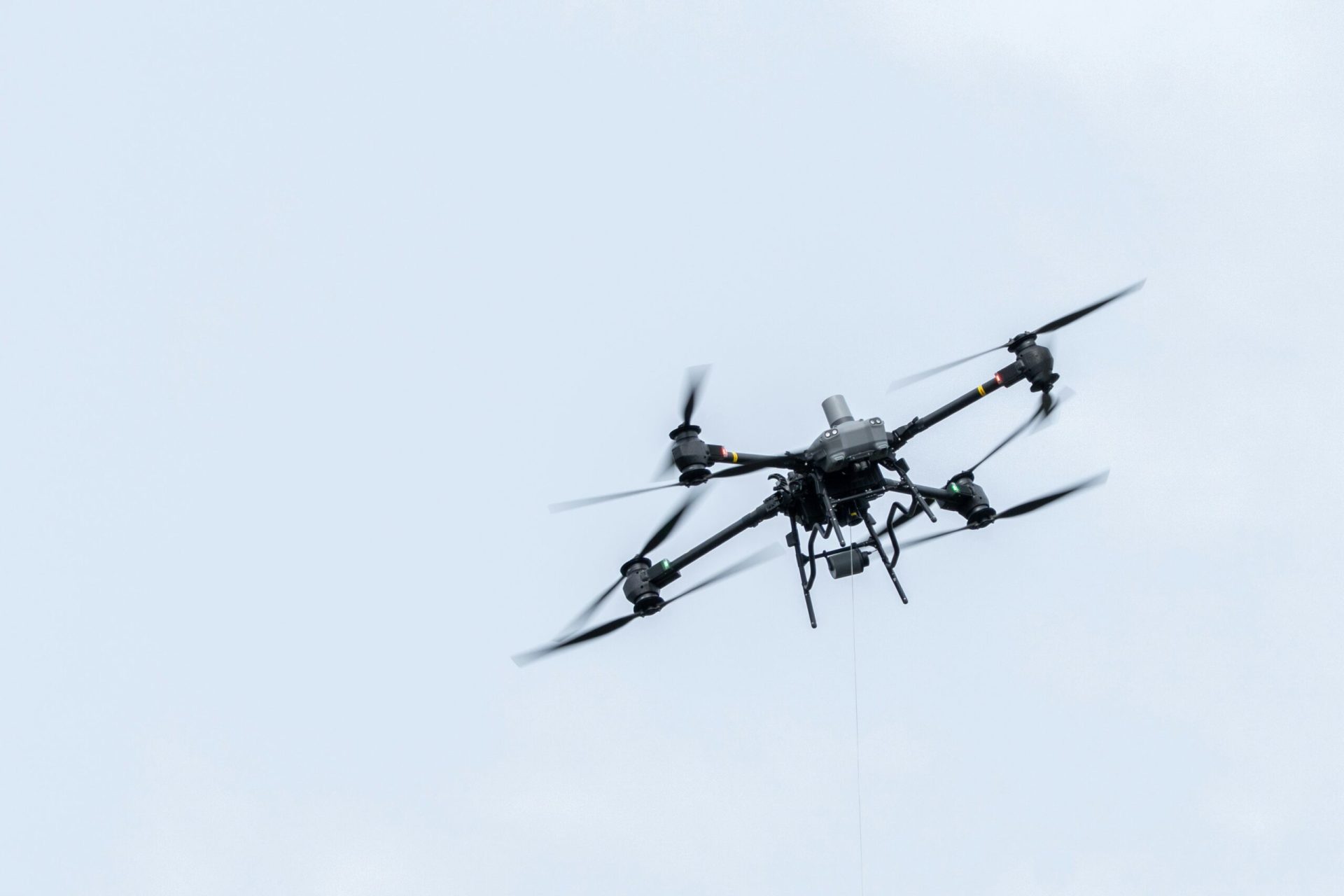
In short: 3D printing is establishing itself in aerospace for lightening parts, producing on demand and making bespoke tooling. The reference material is ULTEM 9085 (PEI), certified for fire, smoke and toxicity for cabin interiors, alongside PEEK and PEKK. Most printed parts are non-structural: trim, air ducts, brackets and jigs.
In aerospace, every gram counts and every part answers to strict requirements. 3D printing finds its place on non-structural parts and tooling, where weight saving, complex geometries and on-demand manufacturing make the difference. This guide reviews the materials, the applications and the sector's requirements.
Why aerospace is adopting 3D printing
Weight saving. By combining topology optimisation with suitable infill, material is removed where it does no work. An ULTEM part can weigh appreciably less than a machined aluminium equivalent of comparable volume (in the order of 50 % less depending on the design, an indicative figure). On an aircraft, every kilo removed translates into fuel saved across the whole life of the airframe.
Geometries that cannot be machined. Internal channels, lattice structures, hollow shapes: 3D printing produces parts that no subtractive process could make in a single piece.
The digital inventory. A spare part can be printed on demand from its file, without tying up physical stock or restarting tooling. Useful for legacy parts or those made in small numbers.
Lead times and tooling. For jigs and fixtures, 3D printing sharply reduces cost and lead time compared with machining (reductions of 60 to 90 % are commonly quoted, as a guide).
Aerospace materials
ULTEM 9085 (PEI, a polyetherimide and polycarbonate blend) is the flagship cabin material. It is certified for fire, smoke and toxicity (FST), self-extinguishing and rated UL94 V-0, while keeping a very good strength-to-weight ratio. ULTEM 1010 pushes thermal resistance further and allows food contact depending on grade. PEEK and PEKK offer superior mechanical and thermal properties for functional parts exposed to heat or chemicals, PEKK being reputedly easier to print and well suited to defence work. Carbon-filled nylon composites serve for rigid, light brackets with less demanding requirements.
| Material | Strength | Typical application |
|---|---|---|
| ULTEM 9085 | Fire and smoke certified (FST), light | Cabin trim, ducts, brackets |
| ULTEM 1010 | Maximum thermal resistance | Technical parts, food contact |
| PEEK | High mechanical and chemical resistance, biocompatible | Exposed functional parts |
| PEKK | Good printability, flame retardant | Aerospace, defence |
| Carbon-filled nylon | Rigid and light, economical | Brackets, jigs |
Properties given as a guide, depending on grade and supplier.
For everything about these polymers, see our guide to PEEK 3D printing and our high-temperature filament page.
The main families of application
3D printing appears at several points in the aerospace chain, almost always on non-structural parts or production tools.
- Cabin trim and interiors. Panels, covers, handles, surrounds, passenger service units — everything that demands the fire resistance of ULTEM 9085.
- Air distribution. Ducts and trunking with complex shapes, hard to make any other way, with optimised internal routing.
- Non-structural brackets and fixings. Brackets, clamps, cable guides, lightened through topology optimisation.
- Jigs and tooling. Assembly fixtures, drilling jigs, protective covers, produced quickly and to measure.
- Functional prototypes. Validating shape, assembly and integration before launch.
Structural or non-structural: a distinction that matters
Most printed polymer parts in aerospace are non-structural or secondary: their failure does not endanger the aircraft. Genuinely structural parts, carrying critical loads, remain the domain of metal (machining, casting, qualified metal additive manufacturing) and of heavyweight certification processes. Drawing that line clearly at the design stage avoids unrealistic expectations of any given material. To choose the right family for your constraint, see which 3D printing technology to choose.
Certifications and requirements
The sector imposes precise requirements according to use. For cabin interiors, ULTEM 9085 meets fire and smoke criteria such as FAR 25.853 and OSU 65/65, and is rated UL94 V-0. Beyond the material, qualifying a part depends on its application, the process, traceability and the requirements of the customer. A part is not "certified" in itself: it is the combination of material, machine, parameters and inspection that is qualified for a given use. Always state your constraints and the standard you are working to at the start of the project.
FAQ
Are printed parts certified for aerospace?
The material can meet precise requirements (ULTEM 9085 for fire and smoke, for example), but final qualification depends on the application, the process and the customer. A part is qualified for a use; it is not certified in the abstract.
Does 3D printing deliver real weight savings?
Yes. Combined with topology optimisation, it clearly reduces mass at equal performance, which counts across the whole life of the aircraft.
Can spare parts be produced on demand?
Yes. A file replaces physical stock, which is useful for legacy parts or those made in small quantities.
Can primary structural parts be printed?
Rarely in polymer. Parts carrying critical loads belong to metal and heavyweight qualification processes. Printed polymer is aimed mainly at non-structural parts and tooling.
Do you work under confidentiality?
Yes. Projects are handled under NDA, with manufacturing and data hosted in France.
An aerospace project? Get an online quote, under NDA. Manufacturing and data hosted in France. Our team, running a high-temperature workshop in France, will advise you on the material that matches your requirements.