From August 1st to 15th, our activity will be reduced. Orders placed during this period may require a slightly longer processing time.

-20% on your first part with code 58OYEO8TGY*

PEEK, PEKK, ULTEM and PPSU 3D printing
Technical parts, ready to use

Industry, maintenance, tooling, demanding environments — have parts made that hold up under heat, under load and over time. Symbio3D is with you from the choice of material through to inspection, so the part you get is dependable.

fdm ultem

A service built for industrial applications

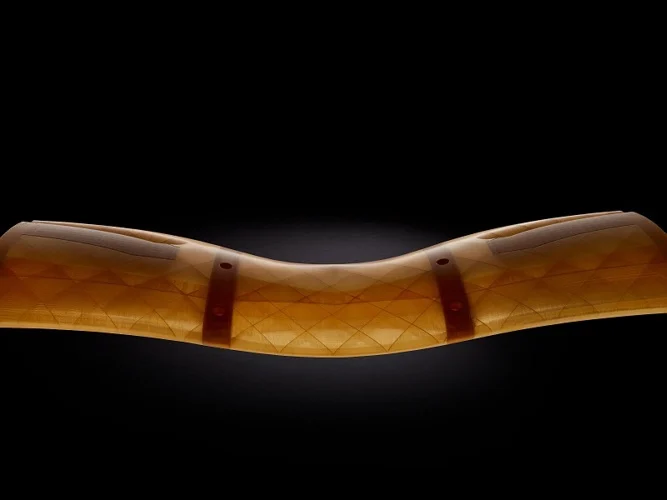
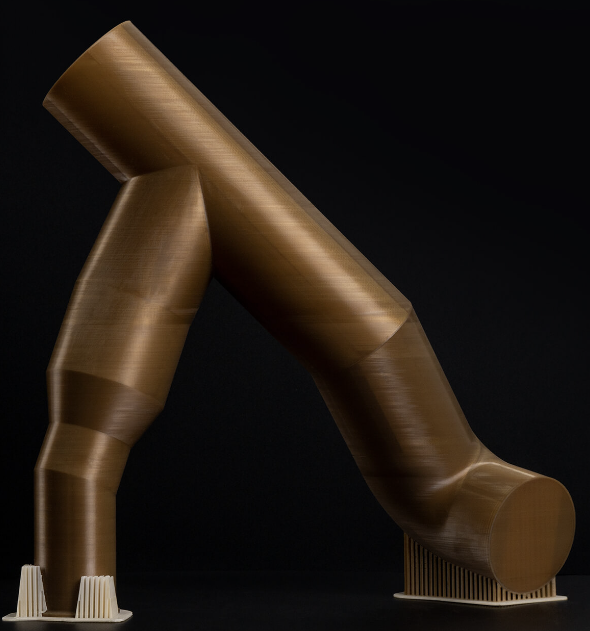
Symbio3D offers high-temperature 3D printing for functional parts intended for demanding environments: heat, mechanical stress, chemical agents, a need for dimensional stability. We are with you from the choice of material to confirming feasibility, and on to delivering parts ready to fit.

High-temperature 3D printing is not just a matter of using a technical filament. It calls for control over the manufacturing conditions — temperatures, adhesion, managing shrinkage — and, depending on the case, for post-processing (heat stabilisation, finishing).

Our aim is to produce a part that is consistent with how you will use it, taking account of the real constraints: temperature, load, environment, tolerances, quantity.

Parts exposed to high temperatures

  • Parts meant to keep working beyond the limits of standard polymers
  • Stiffness and dimensions hold when the part sits near a heat source: housings, covers, brackets, flanges, spacers.

Dimensional stability under thermal stress

  • Parts subjected to repeated temperature swings, where the geometry has to stay stable
  • Applications where alignment, fit or working clearance must stay constant through thermal cycles.

Resistance to creep under heat

  • Parts that carry a load or take mechanical stress at temperature, and have to hold up over time.
  • Brackets, bushings, fasteners and mechanical interfaces under continuous load.

Combined chemical and thermal environments

  • Parts in contact with oils, fuels, solvents, cleaning agents, while also exposed to heat.
  • For areas where standard chemical resistance is not enough and temperature resistance is critical.

Impacts, vibration and repeated loading

  • They suit parts subjected to vibration, micro-impacts or repeated load cycles in an industrial setting.
  • They help limit the risk of cracking and failure, through better mechanical performance and a design suited to the job.

Heavy mechanical loading

  • These materials suit structural parts and fasteners that have to take substantial forces.
  • They keep stiffness and mechanical strength high, with better stability in service.

PEEK, PEKK, ULTEM and PPSU 3D printing

We guide the choice of material by what the part has to do, not by which material is the most premium.

Yes, from prototype through to small and medium runs. Costs come down with quantity and with how far the process can be standardised.

It depends on the constraints: temperature, chemistry, stiffness, creep, budget. We will guide you from your specification. If you have a question, contact us.

They depend on the material, the geometry, the orientation and the post-processing. For critical areas we can propose an approach — extra stock, machining, annealing. Expect roughly ±0.3 mm.

Yes, where it helps dimensional stability and thermal performance. We assess the dimensional effects before starting.

Yes. A PDF or DWG drawing can be enough for us to model and prepare the part. For that, please contact us.

Not yet, but we are looking into how to make it work.

Quote request — high-temperature 3D printing

So we can answer quickly and precisely, please tell us:

  • Maximum service temperature, and the environment (chemicals, humidity, and so on)

  • Loads and stresses, functional areas and tolerances

  • Quantity, and whether you need a prototype or a production run

  • A 3D file or a dimensioned drawing

→ Get a quote
→ Ask for advice

🤖