

 Français
2026-07-07
3D printing vs CNC machining: when to choose which?
In short: 3D printing suits complex shapes, small runs and rapid prototyping, with no tooling cost. CNC machining wins on high precision, surface finish, metals and large volumes. The two are often complementary: you prototype in 3D, then produce by machining when volume or tolerances justify it.
3D printing and CNC machining rest on two opposite logics. The first adds material layer by layer, the second removes it from a solid block. Each has its strengths, and choosing the right one avoids needless cost and delay. What remains is to work out which suits your part.
Two processes, two logics
3D printing is an additive process. The part is built from nothing, layer after layer, straight from the 3D file. No tool to prepare, no material to remove.
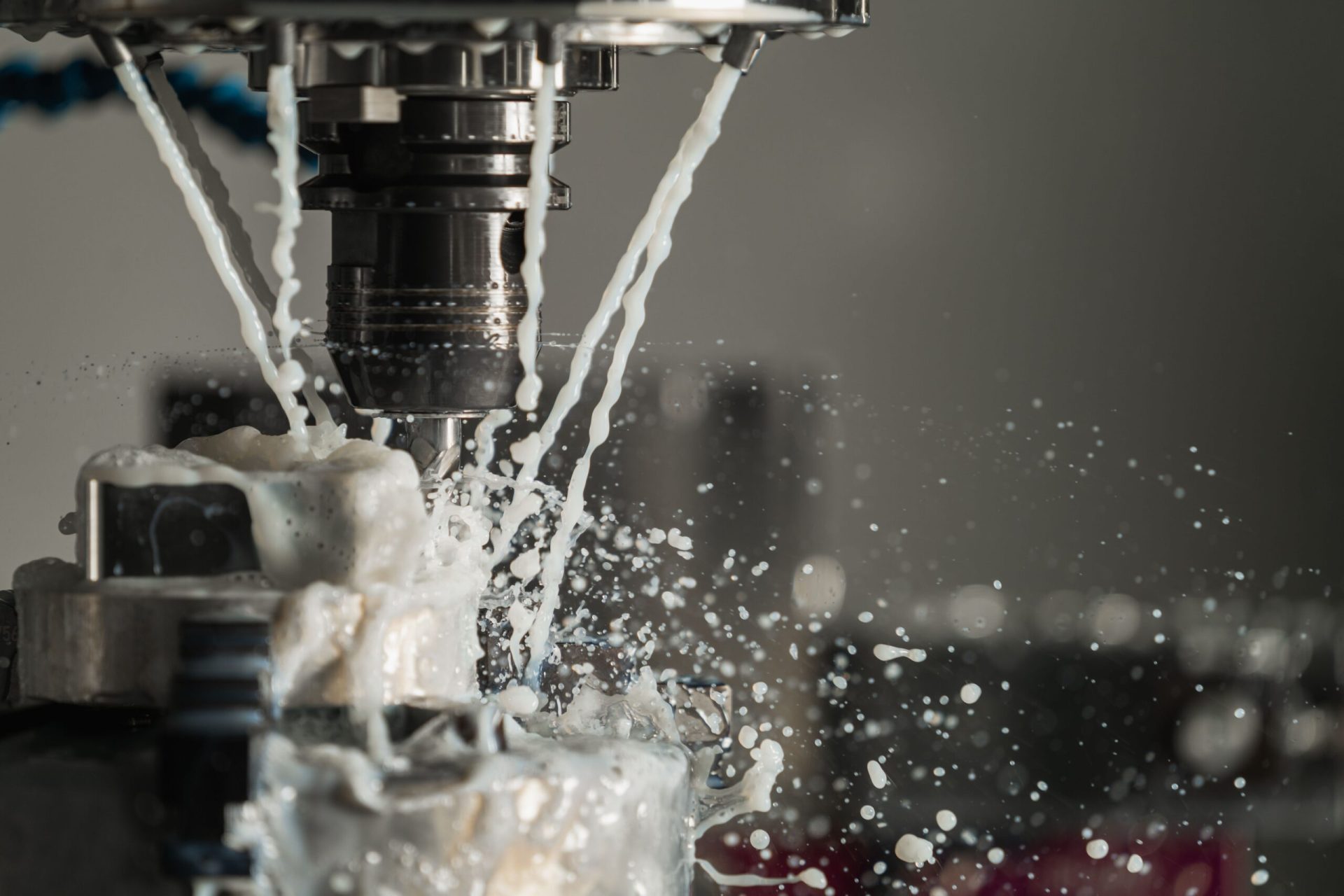
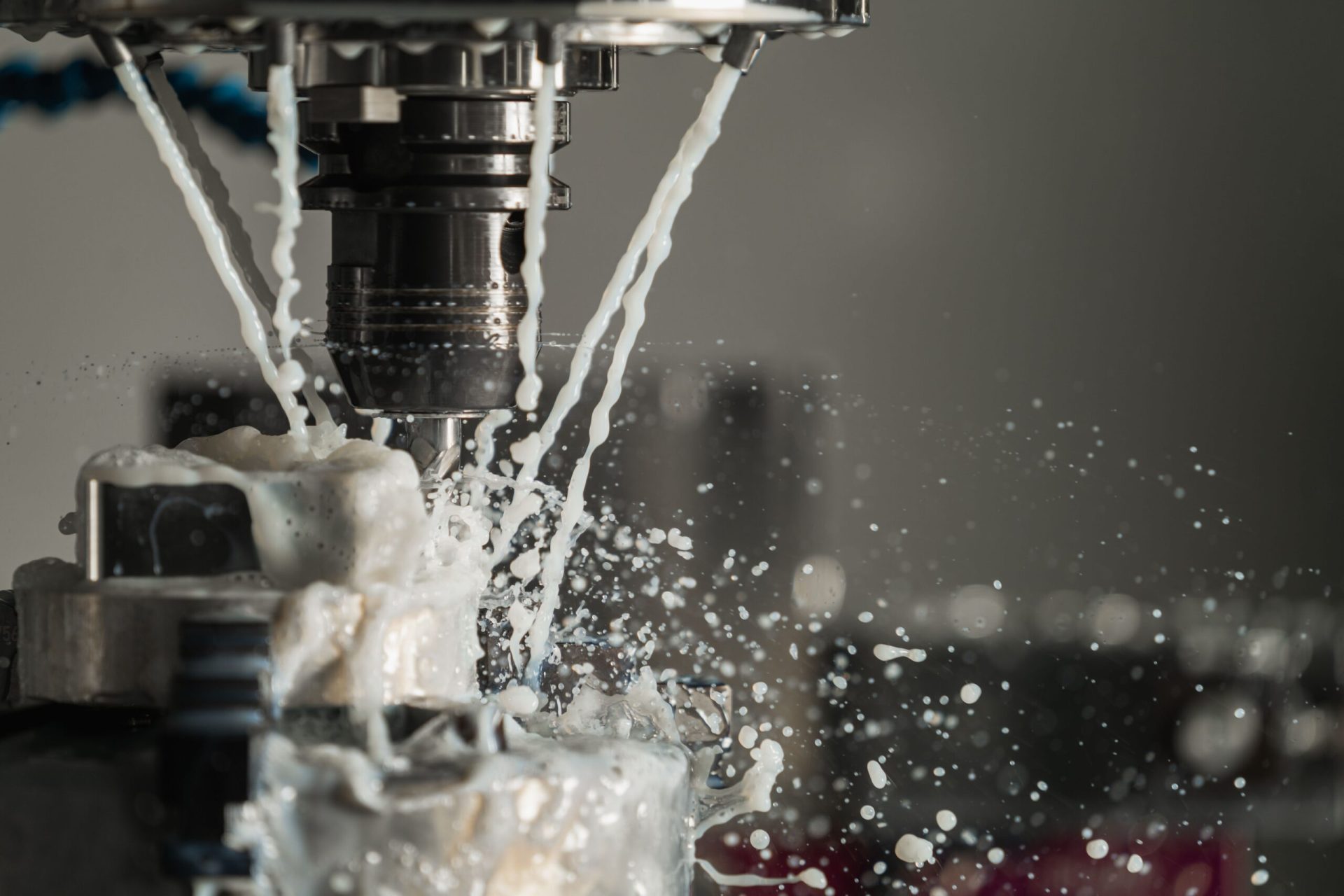
CNC machining is a subtractive process. You start from a block of material (plastic or metal) and rotating tools progressively remove material until the part emerges. The machine is computer-controlled, which gives excellent repeatability.
That difference in principle explains almost every gap that follows: tooling cost, precision, available materials and material waste.
3D printing, or additive manufacturing
It produces complex shapes (internal channels, lightened structures, lattices) at no extra cost, where machining runs into problems of tool access. It requires no tooling, which makes it cost-effective from the very first part. Prototyping is fast and each iteration costs little. It gives access to a wide choice of engineering polymers, up to PEEK and ULTEM. Since the process removes no material, waste stays low.
Its limits: precision and surface finish generally below machining, and parts whose properties depend on layer orientation.
CNC machining, or subtractive manufacturing
It offers superior precision and surface finish, and gives access to metals (aluminium, steel, titanium) as well as many engineering plastics. The part keeps the full properties of the original material, with no anisotropy. On runs of relatively simple parts, the unit cost becomes competitive.
Its limits: programming and work-holding costs for every new part, more material wasted, and difficulty producing complex internal shapes the tool cannot reach.
Point-by-point comparison
| Criterion | 3D printing | CNC machining |
|---|---|---|
| Complex shapes | Excellent | Limited by tool access |
| Precision | Good | Excellent |
| Surface finish | Ridged (visible layers) | Smooth straight off the machine |
| Metals | Limited | Yes |
| Tooling cost | None | Programming and work-holding |
| Material waste | Low | Higher (swarf) |
| Small runs | Ideal | Expensive per unit |
| Large runs | Less competitive | Competitive |
Precision and surface finish: the figures
This is the sharpest gap between the two processes. CNC machining holds far tighter tolerances and produces a smooth surface with no post-processing.
| Aspect | 3D printing (FDM) | CNC machining |
|---|---|---|
| Typical tolerance | ±0.2 to ±0.5 mm | ±0.025 to ±0.1 mm |
| Surface roughness | ~15 µm, visible ridges | down to ~0.8 µm |
| Repeatability | Good | Very high |
Indicative values. An industrial 3D process (resin, powder) tightens tolerances at a higher cost.
For many functional parts, the precision of 3D printing is more than enough. Compare it with the tolerances your part genuinely needs, rather than reaching for hundredths of a millimetre by reflex. On this, see our guide to preparing a 3D file for printing.
Cost according to volume
The cost logic reverses with quantity. In 3D printing there is no set-up to pay off: the first part is already cost-effective, and the unit price stays stable. In machining, programming and work-holding are paid once, then spread across the run. Above a certain volume of simple parts, machining becomes cheaper per unit.
To understand in detail what makes up a price, see how much a 3D print costs.
How to choose
| Your need | Recommended process |
|---|---|
| Prototype or small run | 3D printing |
| Complex geometry, internal channels | 3D printing |
| Metal part | CNC machining |
| Tight tolerances, smooth surface | CNC machining |
| Large run of simple parts | CNC machining |
If you are still unsure about the printing technology itself, our guide to which 3D printing technology to choose complements this comparison.
The hybrid approach
The two processes are not mutually exclusive. Many projects combine them: you prototype in 3D to validate quickly and cheaply, then produce by machining when volume or tolerances demand it. On a single part, it is sometimes worth printing a shape close to the final result, then machining only the critical surfaces that require high precision. That combination brings together the design freedom of additive and the precision of subtractive.
FAQ
Is 3D printing less precise than machining?
Yes, generally. Machining holds tolerances in the order of ±0.025 to ±0.1 mm, against ±0.2 to ±0.5 mm for FDM. But printing produces geometries that cannot be machined, and for many functional parts its precision is sufficient.
Can metal be 3D printed?
Yes, with metal additive manufacturing. At Symbio3D we concentrate on engineering polymers, often a lightweight alternative to metal for parts that do not require its properties.
Which is faster?
For one or a few complex parts, 3D printing is generally faster, since there is no tooling to prepare. On a large run, the gap narrows once machining is under way.
Which wastes less material?
3D printing. The additive process lays down only the material needed, whereas machining removes swarf from a solid block.
Something to manufacture? Get an online quote: we will tell you honestly whether 3D printing is the right option for your part, or whether another process would suit it better.